8/10
Paul Thomas Anderson’s One Battle After Another refuses to merely mirror its era; it interrogates it. The film is political without being didactic, personal without being self-indulgent. It’s less about war itself and more about the perpetual state of struggle — the inertia of resistance. Anderson makes the audience ask, “When does the fight stop?” but never gives an answer, because in his world, stopping means surrender.
The story opens with a revolutionary operation at the U.S.–Mexico border, and that initial rush of adrenaline never really fades. The movement known as French 75 storms a detention facility under the fearless command of Perfidia Beverly Hills (Teyana Taylor), a figure whose presence feels as much mythic as militant. Across from her stands Colonel Lockjaw (Sean Penn), a man whose obsession with control mutates into something grotesque. Their collision — both erotic and ideological — becomes the film’s driving voltage.
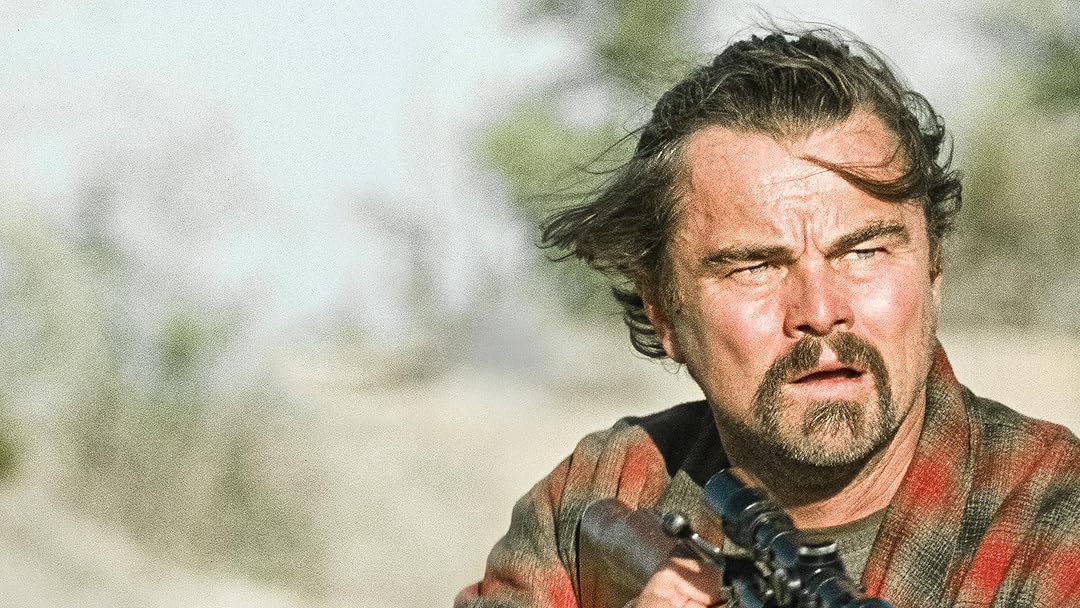
At the center of it all is Leonardo DiCaprio’s Bob, also known as Rocketman, a burned-out revolutionary trying to raise his teenage daughter, Willa (Chase Infiniti). He’s caught between duty and love, between the cause and the child who anchors him to what’s left of his humanity. The film truly breathes when it leans into their uneasy tenderness — those quiet, fractured moments between two people who have both inherited and abandoned the revolution.
Anderson’s camera moves like it’s part of the chaos — not observing but dancing within it. Cinematographer Michael Bauman crafts a world in constant motion, where tension lives in every frame. Some shots — like the wide composition along the border wall — feel painterly, yet the overall rhythm stays raw and kinetic. Jonny Greenwood’s score beats like a pulse, sometimes reduced to a single, repeating piano note that feels like a distant alarm. It’s unnerving, hypnotic, unforgettable.
The performances are electric across the board. DiCaprio gives one of his most restrained and humane turns, a man fueled equally by guilt and love. Chase Infiniti, remarkable in her first major role, gives the film its emotional backbone. Sean Penn’s Lockjaw teeters between menace and absurdity, a grotesque embodiment of authority gone rotten. And even in her limited screen time, Teyana Taylor radiates the conviction and contradiction of a woman who becomes both a myth and a warning.
What makes One Battle After Another hit hardest is how current it feels without naming names. Anderson weaves in themes of immigration, racism, and historical erasure without ever preaching. The film critiques power not through speeches but through behavior, asking what happens when ideology consumes empathy — and what survives when the revolution forgets why it started.
This might be Anderson’s most kinetic film, but it’s also one of his most human. One Battle After Another is not about winning or losing; it’s about persistence. Every frame hums with motion, every cut feels alive. In the end, Anderson reminds us that the fight is never over — but maybe that’s the point. The struggle is the story, and to keep fighting is, in its own strange way, to keep living.
Yorumlar
Yorum Gönder