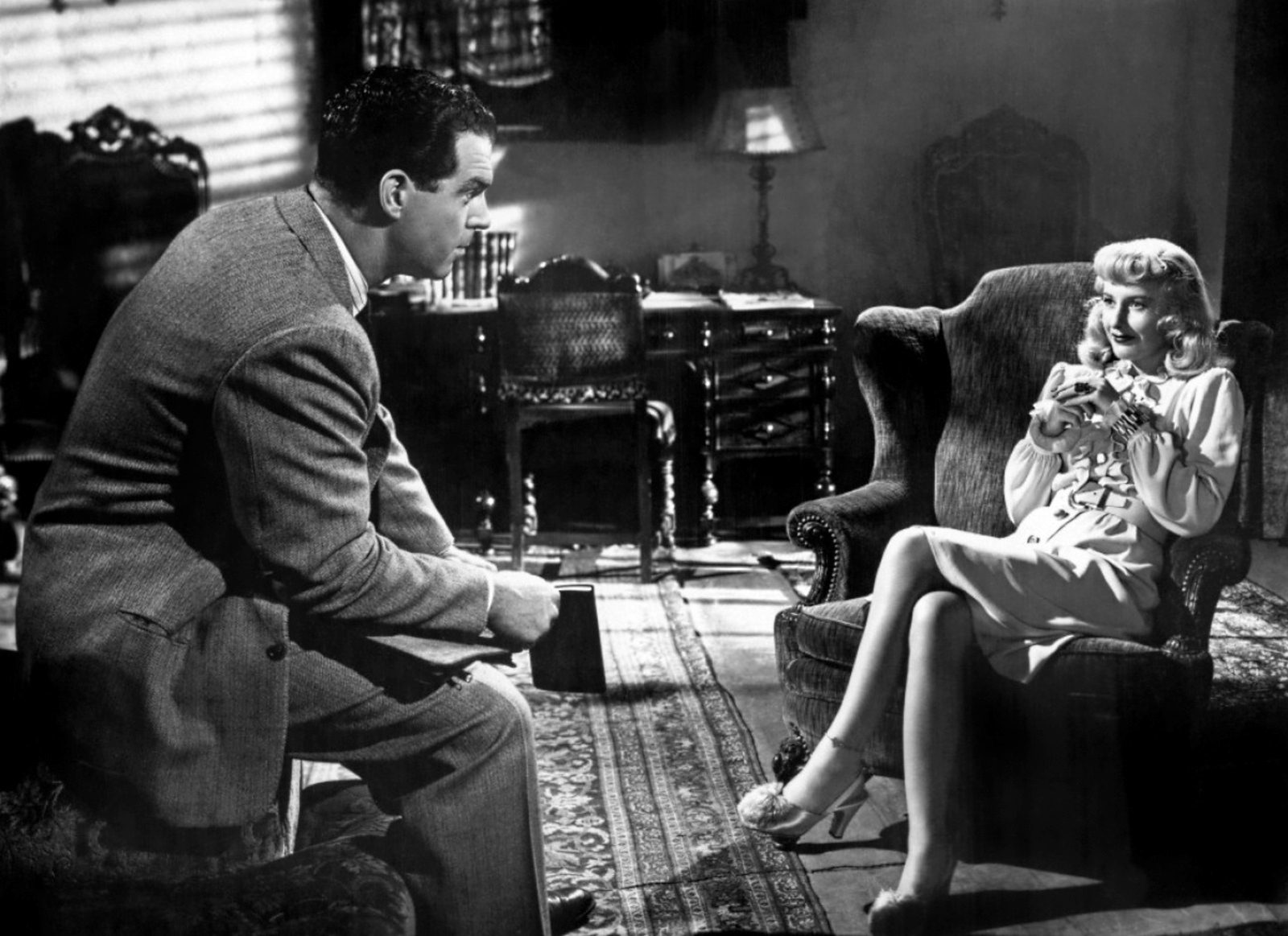
Film noir, whose protagonists often grapple with themes of crime and which creates dark, brooding worlds on screen, is frequently associated with genres such as detective and gangster films. Yet, it possesses distinct characteristics and its own unique codes. Indeed, it introduced audiences not only to portraits of detectives operating within the criminal underworld but also to stories of ordinary individuals entangled in bleak and unsettling events set in urban or small-town environments.
Film noir was influenced by German Expressionism in terms of aesthetic atmosphere, and one of its first examples is Fritz Lang's M (1931). Its arrival in American cinema was marked by John Huston’s The Maltese Falcon (1941), while the last of the classic noir films is widely considered to be Orson Welles’s Touch of Evil (1958). Subsequently, film noir merged with other genres, giving rise to various subgenres in modern cinema. The following list focuses on film noirs produced before 1960.
1. Double Indemnity (1944)
Billy Wilder’s masterpiece, nominated for seven Academy Awards, epitomizes the defining traits of film noir. Walter, portrayed by Fred MacMurray, becomes entangled in an audacious murder plot orchestrated by Barbara Stanwyck’s menacing femme fatale. Wilder’s storytelling in Double Indemnity remains a masterclass in narrative construction and tension.
2. The Maltese Falcon (1941)
John Huston ignited the American noir movement with this film, centering on the intrigue surrounding the mysterious “Maltese Falcon” as a MacGuffin. Humphrey Bogart, playing private detective Sam Spade, became an iconic figure of charisma, defined by his signature fedora and ever-present cigarette.
3. M (1931)
Fritz Lang’s film interweaves the story of a terrifying killer who terrorizes a city with the citizens’ desperate attempts to apprehend him. Its striking use of light and shadow, reminiscent of German Expressionist paintings, left a lasting impression on cinematography of the era.
4. The Lady from Shanghai (1947)
Orson Welles’ The Lady from Shanghai, by the pioneering director of Citizen Kane, follows sailor Michael (also played by Welles) as he falls for a mysterious woman. The narrative between the story’s pivotal turning points and its resolution is filled with moments that will captivate genre enthusiasts. The infamous “mirror” scene remains unforgettable.
5. Mildred Pierce (1945)
Michael Curtiz’s melodrama-infused noir, adapted from James M. Cain’s novel, features Joan Crawford in a standout performance as Mildred Pierce—one of film noir’s most memorable female characters.
6. The Night of the Hunter (1955)
Charles Laughton’s sole feature-length film, The Night of the Hunter, transposes noir into a rural setting. Exploring themes of faith, childlike innocence, and evil, Robert Mitchum’s portrayal of Harry Powell becomes a chilling, almost mythic embodiment of malevolence.
7. Les Diaboliques (1955)
The only French film on this list, directed by Henri-Georges Clouzot of The Wages of Fear fame. Set in a boarding school, it constructs a triangle of murder, conspiracy, and a shocking finale. Its eerie atmosphere and twisting plot leave viewers spellbound. The film also inspired an American remake.
8. Kiss Me Deadly (1955)
Robert Aldrich’s classic detective story unfolds as private investigator Mike Hammer, Mickey Spillane’s literary hero, encounters Christina on a late-night drive. The plot thickens around a mysterious box containing nuclear weapons, elevating the tension to a central element in this noir thriller.
9. Detour (1945)
One of the best examples of film noir set on the road. "Detour," which packs into a mere 67 minutes the chain of events that spirals into chaos after Tom Neal's musician character gets into a man's car, is about the misfortune of being in the wrong place at the wrong time.
10. The House on Telegraph Hill (1951)
The story follows Victoria, a war survivor who flees Europe for America and assumes a new identity. Her new home and life, however, thrust her into challenges as harrowing as those she escaped. Robert Wise’s film achieves a Gothic aesthetic, using a dilapidated house, cliffside locations, and shadowy compositions to heighten suspense.
BONUS LIST:
11. Touch of Evil (1958)
12. Out of the Past (1947)
13. High Sierra (1941)
14. The Big Sleep (1946)
15. Laura (1944)
Yorumlar
Yorum Gönder