
ALICE’S STORY OF SEARCHING
One of Martin Scorsese’s early films, Alice Doesn’t Live Here Anymore, stands out in his filmography by placing a female character at its center—unlike most of his works, which are typically dominated by male leads. Fueled by strong performances and sharp dialogue—especially Ellen Burstyn’s understated yet powerful portrayal of Alice—the film easily earns a place among the director’s finest.
The film tells the story of Alice, who sets out on the road with her son after the death of her husband, seeking a job and a fresh start. Early in the film, we learn that Alice was once a singer before settling into the role of a housewife—though her luck with men hasn’t exactly been great. With her husband gone, the idea of returning to the piano seems appealing. The first half of the film plays out as a kind of road movie, focusing on the mother-son relationship as they drift through motels and bars. But as Alice gives up on her dream of singing and takes a job as a waitress, the story shifts into one of rediscovering love and trying to build a new life.
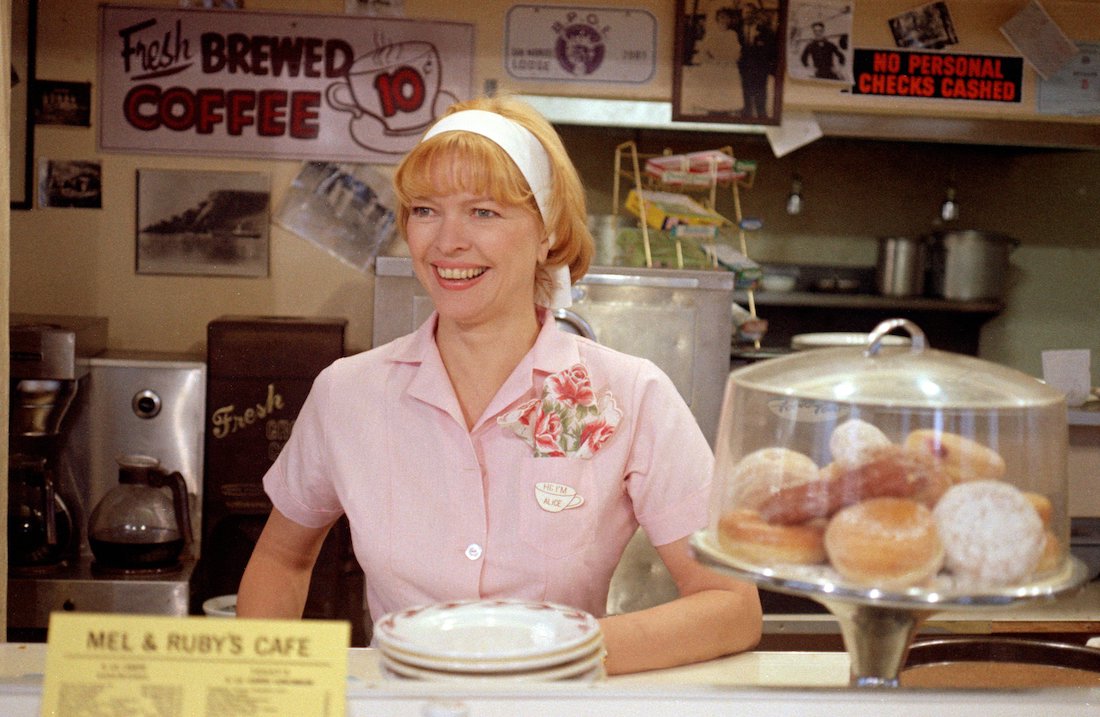
At its heart, the film explores the difficulty of starting over. Rather than soaking the experience of a “middle-aged widow left on her own” in cliché melodrama, Scorsese tells the story with a tone that feels genuine, often infused with humor. The romantic relationship between Ellen Burstyn’s Alice and Kris Kristofferson’s character becomes an element that supports—rather than overtakes—the story.
Throughout the film, we can see Scorsese’s talent for drawing naturalistic, believable performances from his cast. Ellen Burstyn’s Oscar-winning performance is one of the most memorable of its time. She brings Alice to life in a way that makes her easy to relate to—a woman trying to shake off the emotional debris of an unhappy marriage while continuing to play the role of the “woman unlucky with men.” Burstyn’s ability to make the audience truly believe in her character is striking, though not surprising given her skill. Compared to Scorsese’s often “tough” male characters, Alice stands as both gentle and strong.
Among the supporting characters, special mention should be made of Ben—played by Harvey Keitel—whom we meet in the film’s first half. After leaving her long-time home, Alice's first attempt at a new relationship ends loudly and badly, thanks to the unstable and disturbing Ben. Harvey Keitel is disturbingly believable as Ben. Other supporting roles—Alice’s talkative son Tommy, the foul-mouthed waitress Flo, the gruff diner owner—all leave a lasting impression, thanks to energetic and vivid performances.
Part of what makes these characters feel so authentic is Scorsese’s decision to lean more into humor than heavy-handed drama. Especially in the dialogues between Alice and her son, the film offers moments filled with a kind of humor that doesn’t undermine the emotional core. Scenes in the busy diner, where waitresses scramble to serve plates to impatient customers, are not only funny but also leave a slightly bitter aftertaste.
Still, just as Scorsese doesn’t present Alice’s story through a particularly feminist lens, it would also be inaccurate to say the film becomes a sharp social critique of these “misfits.” This is, more than anything, the story of one woman’s small, personal journey. Alice Doesn’t Live Here Anymore holds a unique place in Scorsese’s filmography. It’s a must-see for anyone interested in one of the most compelling female character studies in cinema.
Yorumlar
Yorum Gönder